
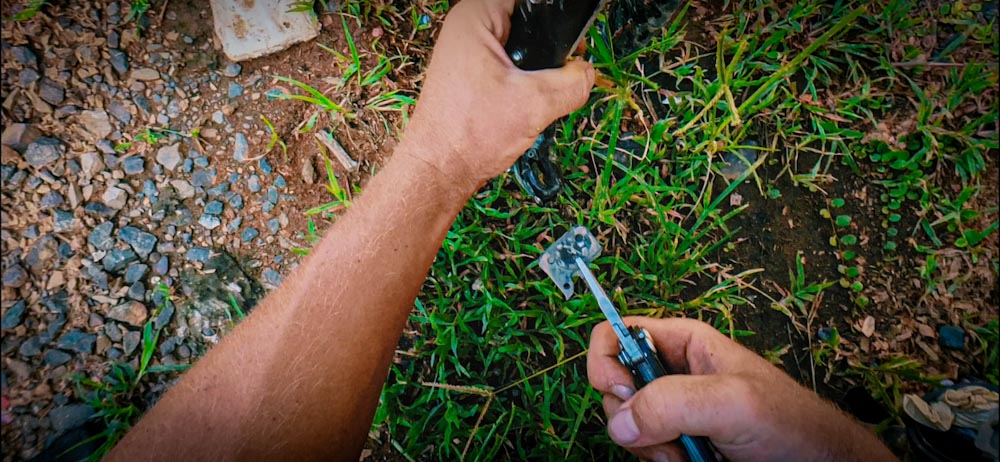
The Good, the Bad and the Ugly – Brake Pads
Brake pads can wear out extremely fast depending on the conditions. What matters more than long descents or frequent braking is often contamination of the braking system: sand, dirty water after rain, mud, or fine dust all act like grinding paste and can destroy pads surprisingly quickly.
On average, I’d say brake pads last somewhere between 2,000 and 10,000 km — depending heavily on where and how you ride.
Organic vs Metallic: Why I Avoid Metal
In general, I try to avoid metallic brake pads. Yes, they often last longer, but they also wear down the brake rotor much faster. With good organic pads, I’ve never had serious issues, even on long alpine-style descents.Buying brake pads on the road is always a bit of a gamble. You never really know what you’re going to get. Especially with semi-metallic pads, I’ve often experienced fading. And when you suddenly lose almost all braking power going downhill, it gets uncomfortable very quickly.
Buying Brake Pads on the Road
Very cheap brake pads can be completely unpredictable as well. I bought some in Colombia for about 1 USD that were practically worn out after just two days.
These days, I test any new pad model on the rear wheel first. A failure due to fading there is far less critical than on the front.
However, if I come across known good organic pads at a fair price, I tend to stock up and carry a few extra sets.
And no — fading is not just a problem of unknown brands. I’ve even had organic pads from big brands that started fading surprisingly quickly.
Disco Brakes kevlar pads are among my personal favourites for long-distance use. Use code ROADSANDCHAINS for 10% off at discobrakes.com.
For more on wear and corrosion issues on long-distance bikes, see The Hidden Cockpit Issues.
For the complete long-distance bikepacking setup, see My Bike Setup After 140,000 Kilometers.
1 thought on “The Good, the Bad and the Ugly of Bicycle Brake Pads”