
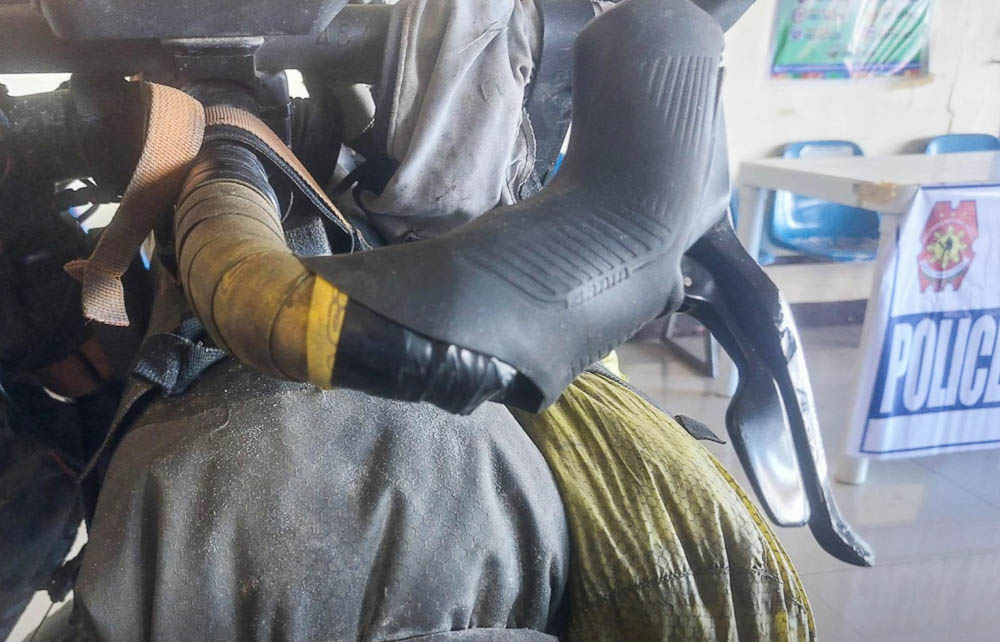
The Hidden Cockpit Issues
Handlebars & Sweat: Why You Should Replace Your Bar Tape Regularly
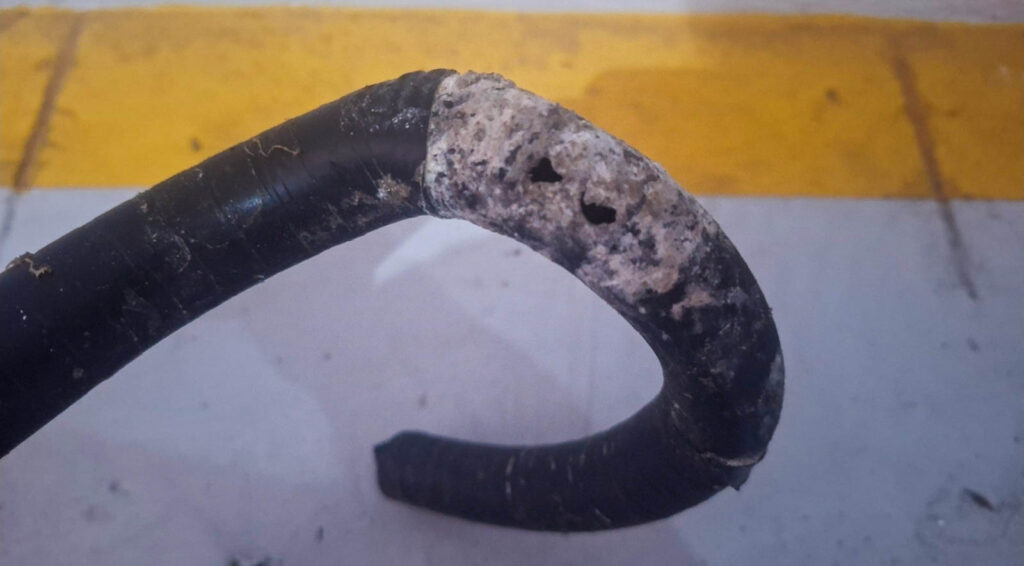
The handlebar is one of the parts of the bike that stays in constant contact with sweat — especially on long rides in hot and humid conditions. When sweat cannot dry properly (for example, trapped under the bar tape), it creates a very aggressive environment. Even anodized or passivated handlebars are not immune in the long run. Corrosion will eventually appear.
The most critical spots are the areas underneath the brake and shifter clamps. These are where moisture collects the most and where the aluminum is often no longer fully protected.
This is exactly why it makes sense to replace your bar tape from time to time. It’s not just about grip and looks — when you unwrap the tape, you can immediately see how the aluminum underneath is holding up. You catch early signs of corrosion long before they become a serious problem.
7000 Series vs 6000 Series Aluminum – The Classic Trade-off
Many high-end handlebars are made from 7000 series aluminum (e.g. 7075). This alloy is significantly lighter and offers higher strength and stiffness compared to 6000 series. That makes it very attractive when every gram counts.
The downside: 7000 series aluminum is much more susceptible to corrosion than 6000 series (e.g. 6061). The 6000 series is a bit heavier, but far more resistant to sweat, moisture, and salt — a clear advantage for long-term, long-distance use.
My Recommendation: Simple EVA Bar Tape
After many tens of thousands of kilometers, one thing has become very clear to me: The best bar tape is simple EVA bar tape without extra foam or gel layers.
- It lasts the longest (even with heavy sweating)
- It absorbs almost no moisture
- It is usually very inexpensive
Expensive “premium” tapes with extra cushioning or special surfaces often look nicer but wear out faster and offer no real advantage under real long-distance conditions.
Seatpost Warning: The Same Aluminum Problem Plus Dangerous Seizing
The same corrosion issues that affect your handlebars also occur at the seatpost — often with even more serious consequences.
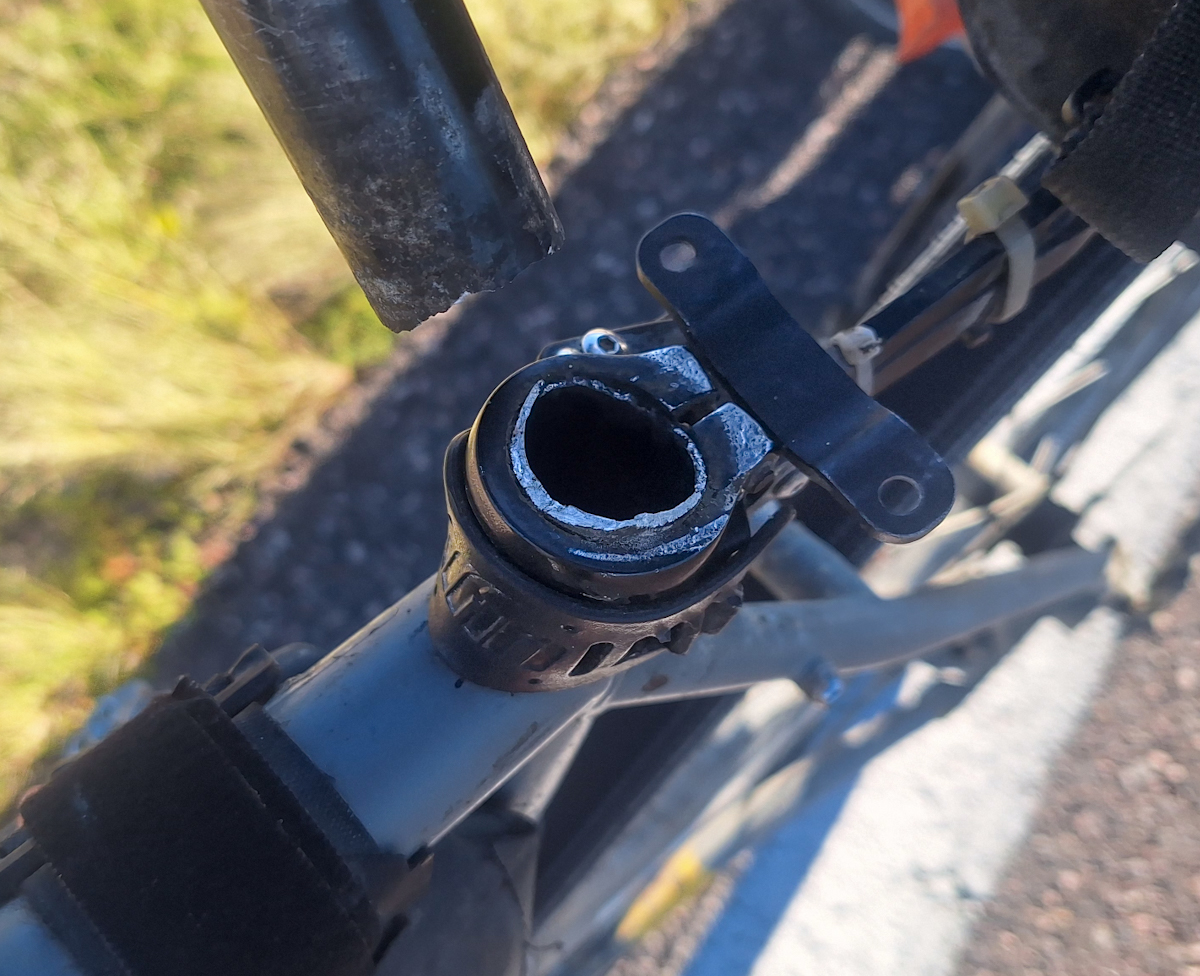
Modern seatposts are usually made from 6061 or 7075 aluminum. While 7000 series offers higher strength, it is also more prone to corrosion when exposed to moisture and salt. The seatpost becomes especially risky because of the contact between the aluminum post and the steel seat tube found in many frames.
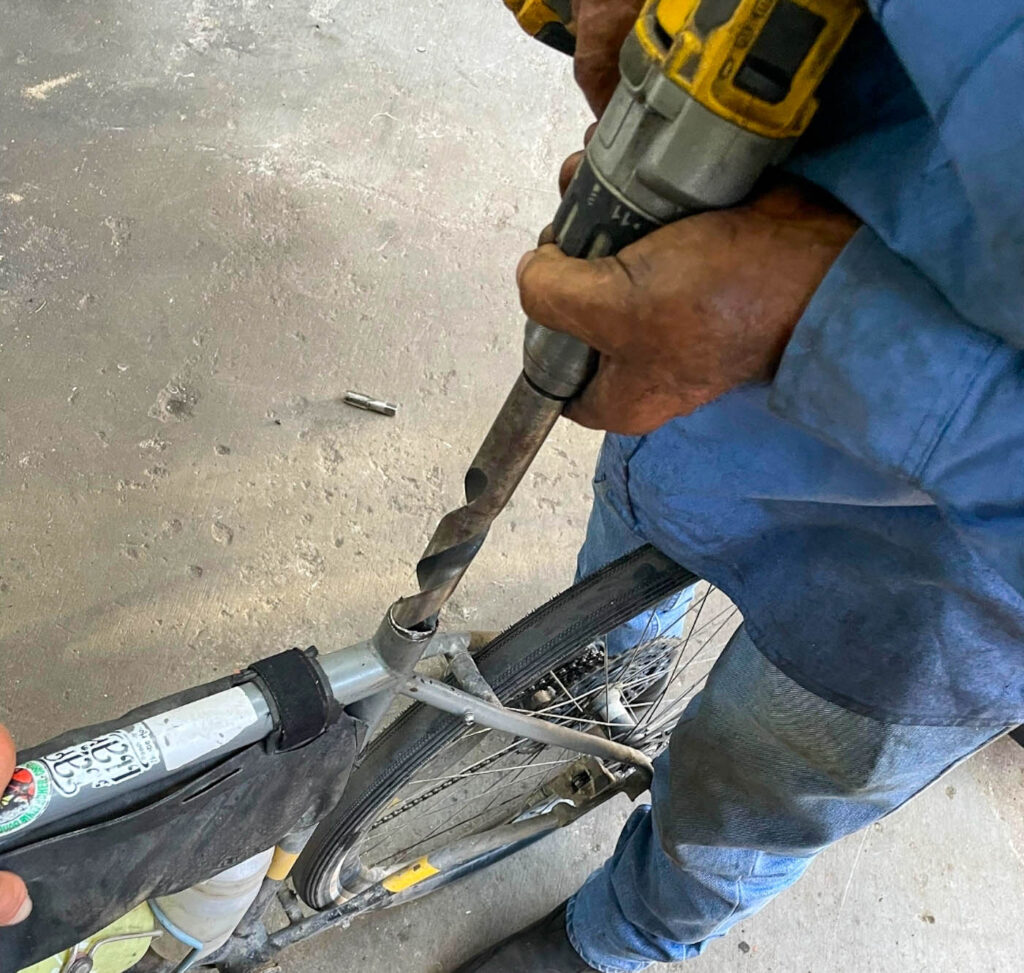
This combination can lead to galvanic corrosion and cause the seatpost to seize firmly inside the frame. Many touring and long-distance riders have experienced a seatpost that can no longer be moved, even with heavy force.In bad cases this is risky and can potentially damage the frame when trying to remove it.
Practical advice:
Apply a good carbon paste on the seatpost before insertion. It works well to reduce seizing and makes future adjustments easier. In a pinch, normal grease is better than nothing.
Re-apply the paste or grease on a regular basis — especially if you ride in wet conditions, sweat a lot, or tour in salty environments.
Conclusion: Treat Your Handlebar as a Wear Item
Your handlebar is a hidden wear item. Replacing the bar tape regularly protects not only your hands, but also the aluminum underneath — and gives you an early warning signal if corrosion is starting.
For more on brake pad wear and what to avoid, see The Good, the Bad and the Ugly of Bicycle Brake Pads.
For the complete long-distance bikepacking setup, see My Bike Setup After 140,000 Kilometers.
1 thought on “The Hidden Cockpit Issues”