
Bike Transportation Guide
Bike travel often means more than just riding. In many cases, it becomes necessary to use other forms of transport to continue the journey, cross long distances, or navigate logistical limits.
Flying with a Bike
Airlines differ a lot
Flying with a bicycle varies significantly depending on the airline. There is no universal rule, and what is allowed or included can change from carrier to carrier.
Because of this, it is strongly recommended to check and clarify all details before arriving at the airport. Ideally, you should already have your bike transport confirmed and booked in advance to avoid unexpected fees or issues at check-in.
Sport equipment policies
Many airlines — especially some Middle Eastern carriers — are quite generous when it comes to sports equipment. In some cases, a bicycle can be included within the regular checked baggage allowance without additional cost, as long as weight and size limits are respected.
However, this is not consistent across airlines. Policies can vary not only between companies, but sometimes even between routes or fare types.
Booking sport baggage
A common improvement in recent years is the ability to add sports equipment during the booking process. This makes planning much easier and reduces uncertainty at the airport.
A good example is AirAsia, where sport baggage can be added directly during booking. The system allows you to select additional baggage in 5 kg increments, which makes it easier to match your actual luggage needs and avoid paying for unnecessary excess weight.
Preparation
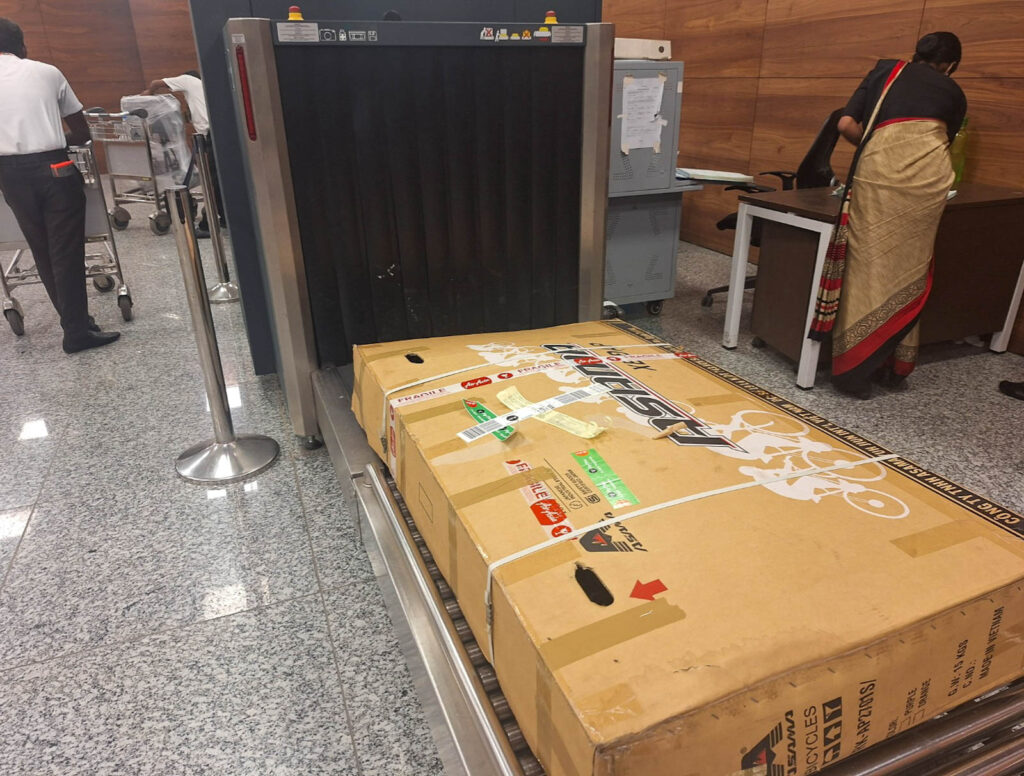
In larger cities — which are typically the starting point for most flights — finding a suitable bike box is usually not a problem. Most bicycle shops either have used boxes available for free or will sell them for a small fee.
However, it is important to always check the dimensions carefully to comply with airline policies. Depending on the size of the box, different levels of disassembly may be required.
For example, in a larger 160 cm box, the handlebars can often stay in place. In a smaller 140 cm box, the handlebars usually need to be removed.
In general, the minimum required preparation is: remove the front wheel, remove the pedals, rotate the handlebars, and lower the saddle.
The rear derailleur should ideally be removed or at least secured to the chainstay using cable ties to prevent damage during transport. The crankset should also be fixed in place with tape or similar material to avoid movement inside the box.
Using additional padding such as bubble wrap or foam is highly recommended, especially around sensitive areas like the frame, derailleur, and fork. This adds an extra layer of protection against impacts during handling and transport.
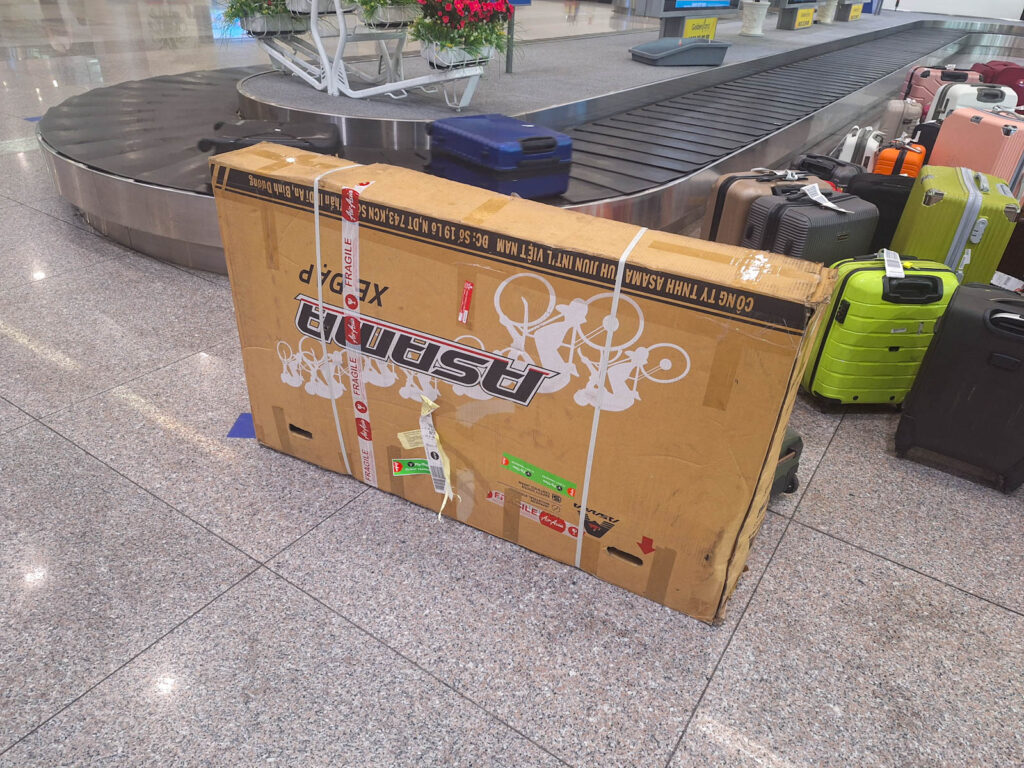
It is also worth keeping in mind that airport handling is not always gentle. Luggage is often moved quickly and not always treated with extreme care, so proper protection is important to reduce the risk of damage.
Key takeaway
Always plan ahead. The earlier you check airline rules and book sport equipment, the smoother your travel experience will be — especially when flying with a bike.
Onward Ticket
Many countries require proof of onward travel — a ticket showing you will leave within the period you are permitted to stay. Airlines often check this themselves before boarding, since they are responsible for flying you back if immigration denies you entry. In practice, immigration itself frequently does not check again. At land borders the requirement varies — in Central America it was asked for regularly, elsewhere rarely.
Rather than buying a real ticket and canceling it, there are services that lend you a genuine flight reservation for a small fee. It is a real booking with a reservation code in your name that can be verified directly with the airline.
I have never personally seen an officer checking the airline to verify — but faking a ticket was never a risk worth taking.
I have had good experiences with onwardticket.com. The ticket arrives within minutes and the reservation code is verifiable with the airline directly. I tested a cheaper alternative once — it took over half an hour to arrive and only one segment of the journey showed up when checked with the airline.
Bus Travel with a Bike
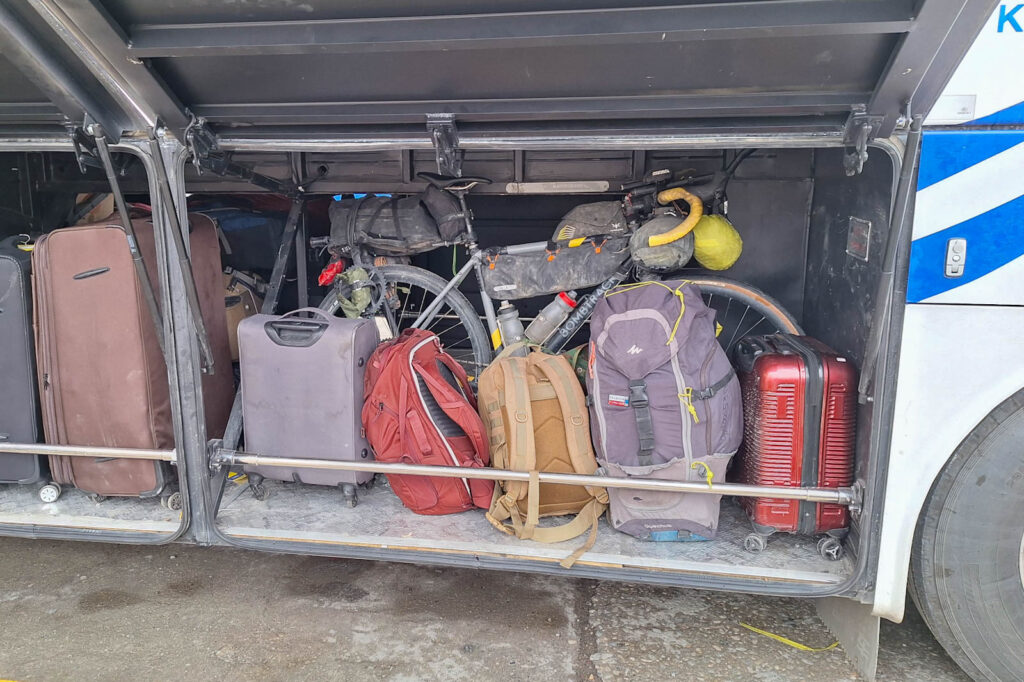
I rarely travel by bus, so firsthand experience here is limited. When I have taken one, larger buses have always taken the bike directly in the luggage compartment without any disassembly. On smaller minibuses, the bike typically goes on the roof. In that case it is worth watching the loading process and making sure the derailleur side faces up — it is a simple thing to check but easy to miss.
From other cycle tourers I have heard that a small extra fee for the bike is common, though not universal. Worth having some loose change ready.
Ferries & Boats
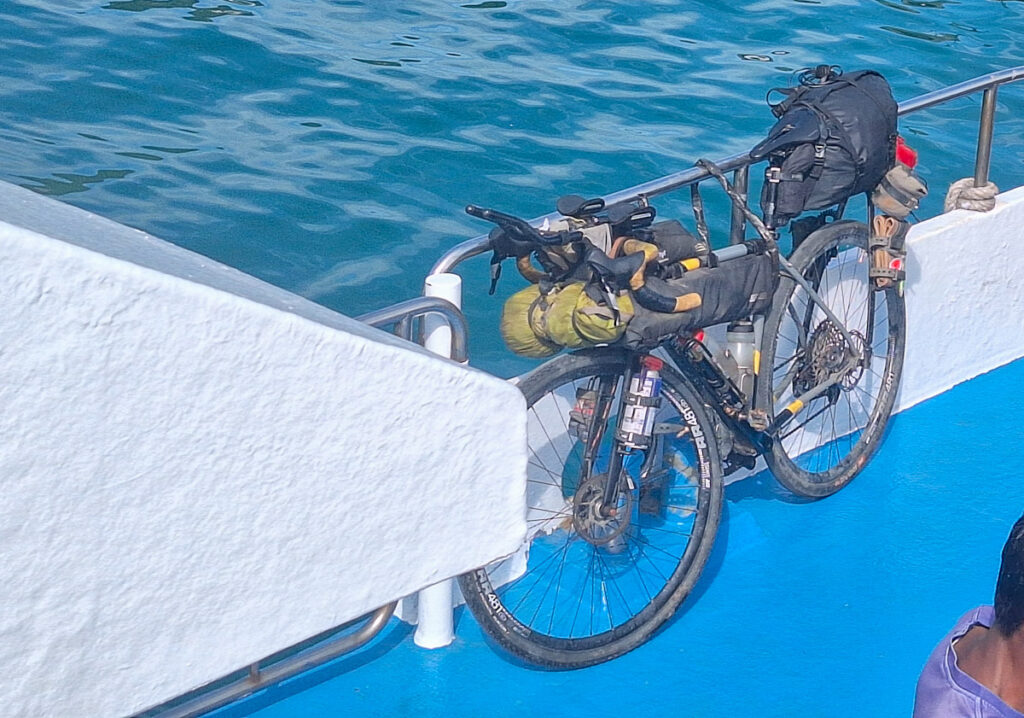
Ferries and boats come up regularly during long-distance bicycle travel — whether crossing rivers, lakes or open sea.
In most cases it is straightforward: you ride on, stay close to the bike during the crossing, and ride off on the other side. No special preparation needed.
For longer crossings or when rough conditions are expected, it can make sense to secure the bike against falling over. A standard lock is usually sufficient for this — looped around a railing or fixed point on deck.
In Japan the crew takes care of everything. The bike is handled professionally and triangular chocks are placed in front of and behind the wheels to prevent rolling. Nothing to worry about there.
After any sea crossing, it is worth washing the bike with fresh water as soon as possible to remove salt. If it has been raining during the crossing, that usually takes care of it naturally.
Taxi apps
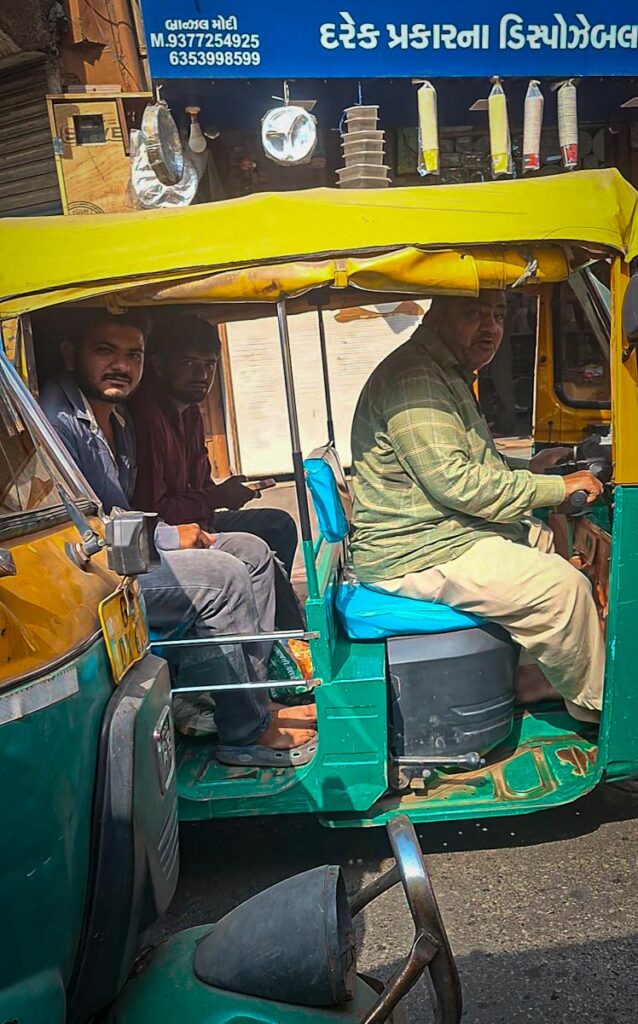
Occasionally a taxi is the right call — most often when getting to or from the airport with a boxed bike. Rather than flagging down a cab on the street, a taxi app lets you book in advance, choose a large enough vehicle, and avoid fare negotiations. Most apps allow you to add a note about luggage, which helps ensure the driver shows up with enough space.
One practical advantage of having an eSIM set up before arrival: you have data the moment you land, which means you can order a taxi directly from the airport without needing WiFi or a local SIM first.
All apps work similarly — you set the pickup point, enter the destination, and track the driver in real time. The main difference is which transport options are available: some markets offer motorbike taxis or, in India, auto-rickshaws with a choice between electric and petrol.
- Uber — the default option in most countries. No further introduction needed.
- Grab — the equivalent of Uber across Southeast Asia.
- InDrive — available in Pakistan and throughout much of South America including Argentina, Brazil, Chile, Colombia and Peru. Uses a fare negotiation model where you propose a price and drivers accept or counter.
- DiDi — China’s dominant taxi app. A separate app is not always necessary as DiDi is also accessible as a mini-program inside WeChat and Alipay.
- 99 — Brazil’s biggest local taxi app, owned by DiDi. Worth having alongside Uber when in Brazil.
Border Crossings
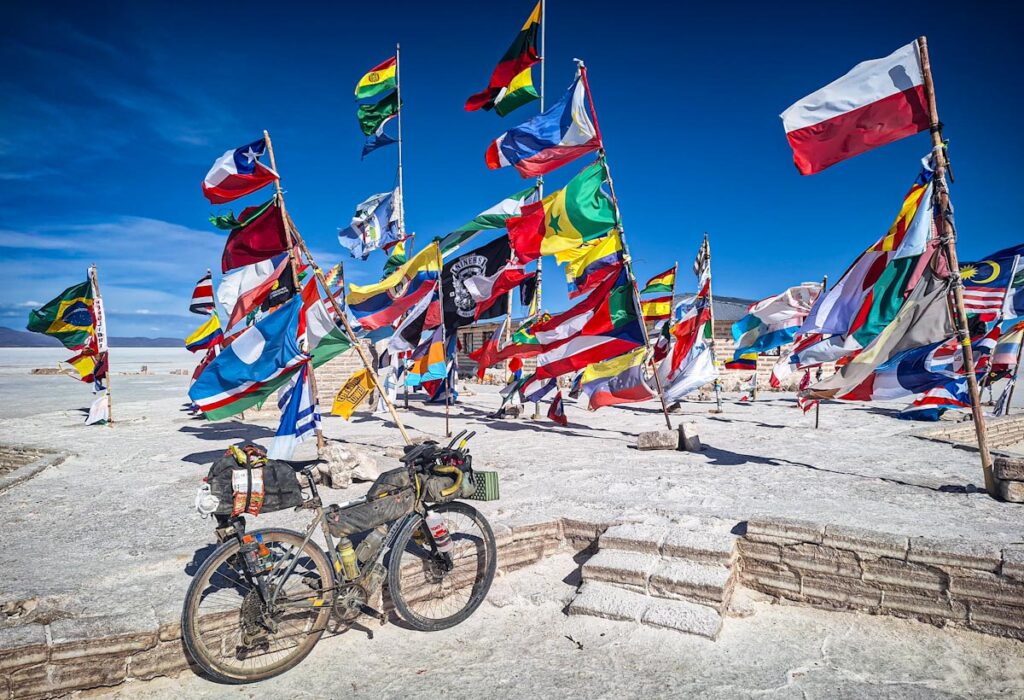
When crossing overland with multiple options available, I always try to use smaller border crossings. In most cases things move faster there — unless the officer who issues visas on arrival needs to be called in specially. For visa-free countries, smaller crossings are almost always the more pleasant choice.
If a visa, e-visa or visa on arrival is required, it is essential to check in advance which crossings accept or issue which type. Laos and Cambodia are two good examples where different crossings have different rules — particularly for e-visas and visas on arrival. With a full passport visa issued by an embassy you can usually pass through any crossing, except binational ones. Embassy visas in neighbouring countries across Asia are generally quick and straightforward to obtain. In Ho Chi Minh City I once walked into the Lao consulate and had the sticker in my passport within half an hour of arriving.
Baggage checks at land borders are rarely an issue with a loaded bicycle. Often you simply walk through without being stopped. Occasionally you will be asked to send your luggage through the X-ray machine — but if you explain that everything is strapped to the bike, opening the rear bag is usually sufficient.