
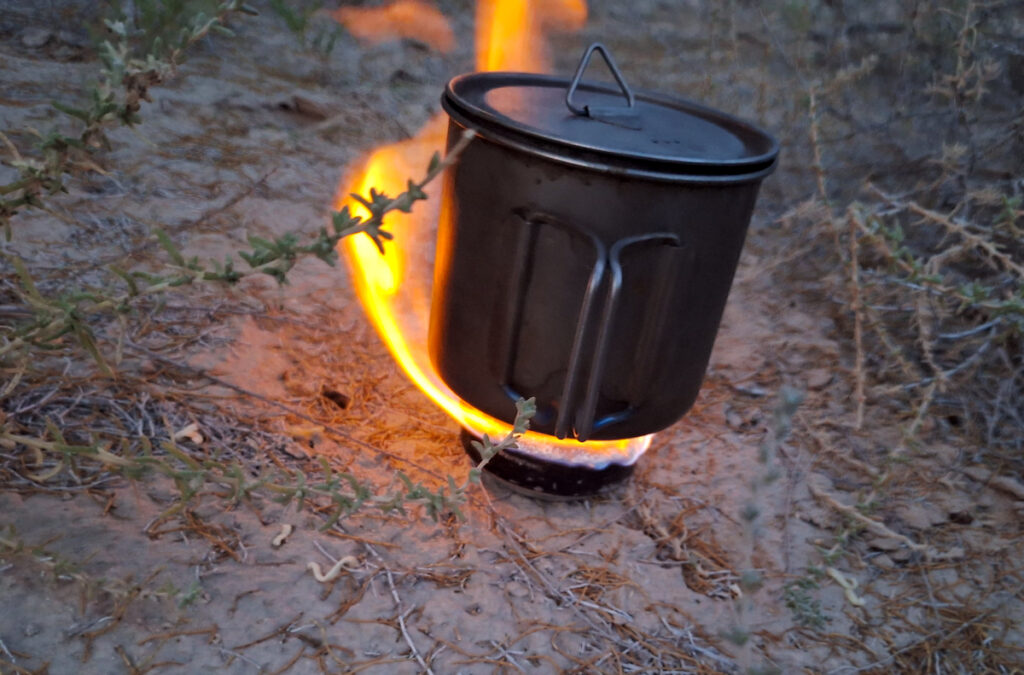
The Alcohol Stove: Why I Still Cook with a Beer Can After 140,000 Kilometers
There are three realistic fuel options for long-distance bicycle travel: gas, petrol and alcohol. After years of riding across dozens of countries, I settled on alcohol — and more specifically, on a stove I built myself from a single beer can.
This is not the fastest or most comfortable option. But for long-term travel, it is the most reliable system I have found.
The Stove Itself
My current stove weighs around 8 grams. It is cut and shaped from a single aluminium beer can, built without any special tools or materials.
At some point during a trip I accidentally stepped on it. After a few minutes of reshaping it was functional again. There are no moving parts, no seals, no jets that can clog, no valves that can fail. There is genuinely nothing that can break in a way that cannot be fixed on the road.
And if it ever does get damaged beyond repair, the replacement cost is one beer — available in most countries on earth. The new stove takes around fifteen minutes to build.
Wind
Alcohol stoves are sensitive to wind. This is probably the most relevant practical limitation worth being honest about.In exposed conditions, wind pulls heat away from the pot and makes the flame unstable. A windshield helps significantly — and on the road, building one from stones or sand takes about thirty seconds. It does not need to be perfect. Even a rough semicircle of whatever is available on the ground reduces fuel consumption noticeably.
In practice, across years of cooking in very different conditions, I have always managed to get something hot. But in windy conditions, fuel consumption goes up. That is worth planning for, especially when supplies are limited.
Why Not Gas?
Gas is the most comfortable option. The flame is instant, controllable and clean. I understand why most people start with gas.
The problem is availability.
I have met several long-distance cyclists who had been eating cold food for days — not because of bad luck, but because gas canisters simply were not available where they were riding. Remote areas, smaller towns, countries where camping infrastructure barely exists: gas can disappear entirely.
Beyond availability, there is the connector problem. Different regions use different canister standards. Adapters exist, but you need to already have the right one, and finding a specific adapter in a random hardware store in rural Southeast Asia or South America is not a given.
Gas canisters also create a weight management problem that is easy to underestimate. The canister itself weighs something, and a partially empty canister still has to be carried. You cannot easily transfer fuel between canisters, and throwing away a half-full canister feels wasteful. With alcohol in a simple plastic bottle, you carry exactly as much as you need.
Why Not Petrol?
Petrol availability is genuinely unbeatable. Almost everywhere in the world, fuel stations exist, and white gas or unleaded petrol is easy to find.
But petrol stoves come with real trade-offs for long-term travel.
They are heavier and mechanically complex. They require regular maintenance, cleaning and occasional part replacement. If the stove is not sealed perfectly, everything nearby starts to smell of fuel — bags, food, clothing. And before any flight, the stove needs to be cleaned so thoroughly that no fuel residue remains, which is time-consuming and not always fully achievable under travel conditions.
For a base camp or expedition context, petrol makes sense. For continuous bicycle travel with frequent flights and minimal kit, it adds friction I would rather avoid.
Alcohol: The Practical Reality
Alcohol burns slower than gas or petrol. Boiling water takes longer, and in cold conditions the difference becomes more noticeable. This is a real trade-off worth acknowledging.But in exchange, the system becomes almost frictionless everywhere else.
In practice, fuel consumption is lower than most people expect. One litre lasts me around three weeks of regular camping — cooking one or two meals per day. That fits easily into a small plastic bottle, and refilling is rarely urgent.
Ethanol is available at pharmacies worldwide. Sometimes it takes a few attempts to find concentrations above 70%, but it exists almost everywhere. In some countries it is even sold at petrol stations — in Brazil, for example, ethanol is available at the pump and costs less than petrol.
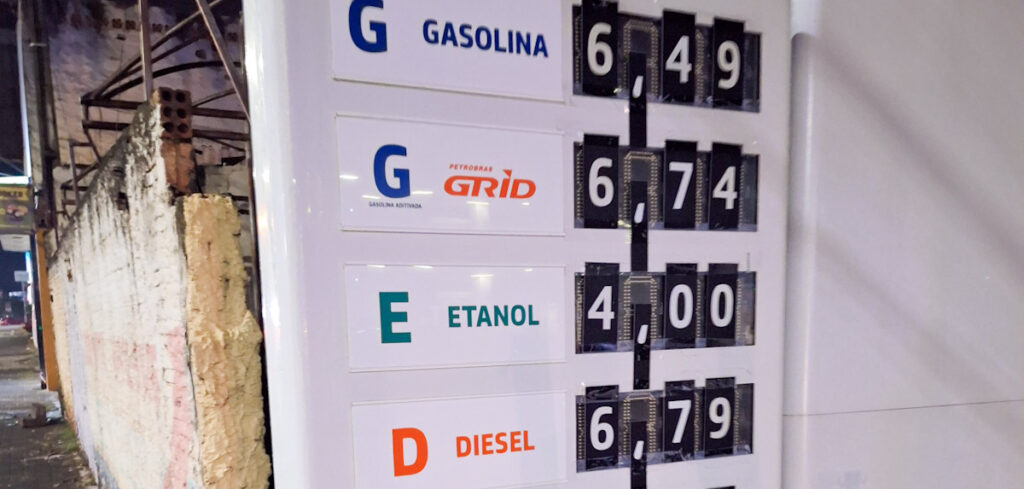
In regions where ethanol is harder to find, isopropyl alcohol is often easier to source — California being a good example. It works just as well, though it produces slightly more soot on the pot. Even 70% alcohol functions in an emergency, though the flame is weaker and less stable.
The fuel goes into a standard lightweight plastic bottle. No cartridges, no connectors, no compatibility questions. You buy what you need, pour what you use, and carry the rest.
Conclusion
For short trips or well-serviced touring routes, gas is genuinely the more comfortable choice. I would not argue otherwise.
For long-term independent travel across multiple countries and continents, the alcohol stove removes more problems than it creates. The stove itself weighs almost nothing, can be rebuilt anywhere in the world from a single beer can in fifteen minutes, and can survive being stepped on. The fuel is available on nearly every continent without any compatibility concerns.
Wind requires some adaptation, and boiling takes longer than with gas. Both are manageable. Running out of fuel options entirely is not.
After years of riding through remote areas, I have never once been unable to cook because of my fuel choice.That matters more than a faster boil time.
For the complete long-distance bikepacking setup, see My Bike Setup After 140,000 Kilometers.